
Breathwork

Breathing - why it's so important.
The way we breathe is intricately linked to the way our body functions. We take about 26,000 breath’s a day and it’s a very automatic process established at birth. Unfortunately the way we breathe is often disordered, leading to some aspect of physical dysfunction. This often creates symptoms such as: tiredness, stress, anxiety or breathing problems such as asthma.

Why work on your breath?
Most people breathe too fast, too shallow and inhale too much air. Mouth breathing is also common and requires retraining. Poor breathing patterns lead to poor oxygenation of your tissues and cells and this impacts the body’s physical function. To change how we breathe takes awareness, attention and practice. I coach clients to breath low, slow and deep.
Eastern philosophies such as yoga and Tai Chi have always taught that breathing is a key component of health. In the West we have never been taught to address it. With this programme of exercises you will learn the science and the practice from a fully qualified instructor. To get started and book to retrain your breathing please click the button below.
Benefits of breath training
When you focus on your breath you change your brain waves. When you retrain your breathing you oxygenate your body which enables it to relax and function properly.
Working with your breath also stimulates your vagus nerve. The vagus nerve connects every organ in your body, so when you retrain your breath you start to manage your autonomic nervous system. This includes things like your digestion; breathing; cardiovascular function and reflex actions. It also connects your brain, your heart and your digestive system making it a critical factor in mental well-being.
Training yourself to breathe well can therefore impact physical, mental and emotional wellbeing.
The science of breathing
Breathing is a complex process involving three key components which the exercises I teach are designed to address:
- The mechanical act of breathing in and out – ventilation
- The exchange of oxygen and carbon dioxide with the blood – perfusion
- The release of oxygen from the blood to the tissues and the transfer of carbon dioxide from the tissues to the blood – cellular respiration.
I teach a lot of the science as I teach you the breathing exercises. You can also download my ‘top five myths’ about breathing below.
References
Kiesel, P.T. et al (2017) Development of a screening protocol to identify individuals with dysfunctional breathing. The International Journal of Sports Physical Therapy 12(51), DOI: 10.16603/ijspt20170774
Djupesland, P.G. et al. (1999) Nitric oxide in the nose and paranasal sinuses – respiratory tract physiology in a new perspective; Tidsskr Nor Laegeforen 119(27); pp.4070-4072.
Bryan NS, et al. (2017) Oral microbiome and nitric oxide: the missing link in the management of blood Pressure. Current Hypertension Reports:19(4):33.
Stephan BCM, et al. (2017) Cardiovascular disease, the nitric oxide pathway and risk of cognitive impairment and dementia; Current Cardiology Reports: 11;19(9):87.
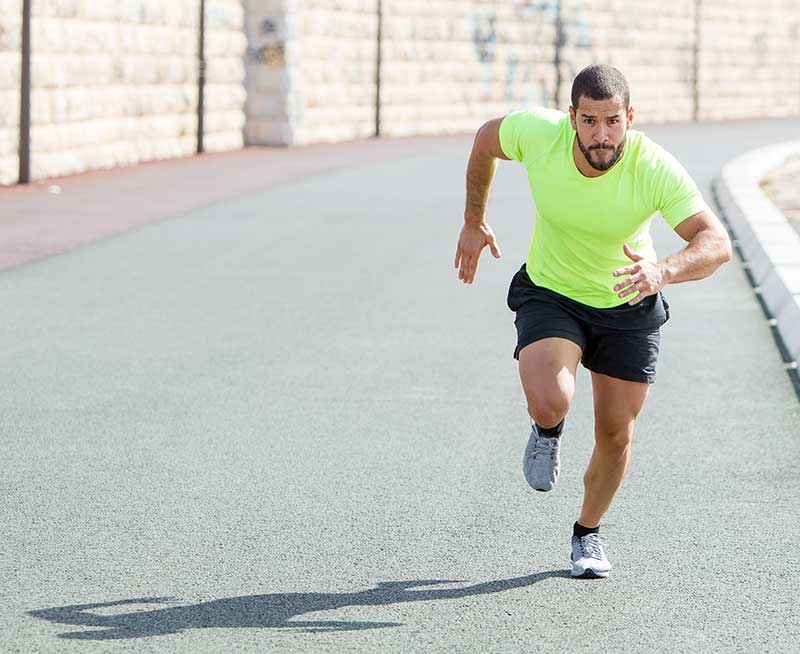
Maximising sports performance through breathing
Breathing for improved sport performance
- Improve running economy & running time
- Reduce breathlessness whilst running
- Achieve your personal best
- Delay lactic acid & fatigue
- Prevent gassing out too soon
- Push your limits
- Improve repeat sprint ability
- Improve aerobic capacity
- Improve respiratory muscle strength
- Simulate high altitude training

The breathwork training
A basic programme is usually 4 x 1 hour sessions. This gives me enough time to assess your breathing, teach you the science and the practical exercises to retrain your breathing, as well as track your progress. Depending on your level of health and fitness we may be able to start working on your sports and exercise performance. This stage of the programme uses exercises which simulate high altitude training to teach the body to do more with less. This improves athletic performance for both recreational and professional sports people.
Is it for me?
I train all kinds of people from all walks of life. The best way to find out is to make an enquiry or just give me a call on 07740 876233. You can also fill out the breathing questionnaire below to get some feedback on your breathing.

Signs and symptoms that your breathing is disordered
Signs that your breathing may be disordered or that you need to improve your breathing include.
- Feeling tense
- Cold hands and feet
- Hayfever and allergies
- Frequent sighs and yawns
- Poor sleep
- Mouth breathing at night (dry mouth in morning)
- Exercise induced breathlessness or asthma
- Snoring
- Frequent muscoskeletal injury
- Low BOLT score
Do you struggle with any of these issues?
Anxiety and panic disorder
Training the breath stimulates the vagus nerve and improves vagal tone. Scientific studies have confirmed that this develops greater resilience to stress. There is a clear connection between how we breathe and nervous system function. Focusing on the breath, calms the body and feedback from the body influences the heart and the brain and therefore the mind. This lowers anxiety as well as providing techniques to intervene when feelings of panic are triggered.
Inflammation
Vagus nerve stimulation causes release of a neurotransmitter called acetylcholine. This blocks the release of inflammatory molecules to reduce levels of inflammation in the body. Most chronic disease has an inflammatory basis or component which originates from the immune system. The majority of our immune cells are located very close to our gut lining forming part of our autonomic (automatic) nervous system. So nutrition and breathwork combined bring balance back to both systems, with multiple health benefits.
Poor circulation
Breathing properly dilates the airways and the blood vessels. This improves gas and nutrient exchange for improved circulation and organ function. Sometime results can be felt quite quickly, it depends on the current level of breathing dysfunction which is assessed and monitored.
Acid/alkaline balance
How we breathe affects our pH balance which is critical for health and tightly controlled. Sometimes we adversely affect this with poor breathing practices.
Stress
When we breathe properly we stimulate the vagus nerve and switch the body to rest and digest. This instigates profound physical relaxation which is deeply healing for the body.
Low energy
To oxygenate the body we need to breathe correctly. A relaxed, oxygenated body functions better. This energises us and can often improve our physical health in significant or more subtle ways.
Breathing difficulties
Training the breath can often improve or overcome these partially or sometimes completely. For some clients their reliance on inhalers has reduced or even stopped completely.
Heart rate variability
This is a key marker for health and breathwork targets this directly with specific exercises.
High blood pressure
Training your breathing to slow down activates the parasympathetic response of the nervous system and leads to a fall in systolic blood pressure. Over a longer term this calming response reduces blood pressure, heart rate and respiratory rate levels. Both systolic and diastolic blood pressure decrease with slower breathing.
Sports performance and exercise
During training we often spend a lot of time exercising our muscles but the breath is usually the limiting factor of overall performance. Breathwork trains you to increase VO2 max, delays acidosis and teaches the body how to do more with lower levels of breathing.
Sleep problems
When we focus on the breath we calm the mind. Sleep is much more refreshing if we reset our nervous system before we sleep. To breathe correctly during sleep we first of all have to learn how to breathe correctly during the day. This often requires retraining the breath to generate new neural pathways for light, slow and deep breathing.
Snoring
Training the breath can often resolve snoring which can be very detrimental to relationships and health, especially if it develops into sleep apnoea. At night the muscles of the throat relax so the breath can vibrate the airways causing snoring. Breathing exercises tone up these tissues and teach you how to breathe light and slow so the airways can relax and open, to allow quiet breathing throughout the night.
Diabetes
Diabetes has a negative impact on lung health and is a risk factor for sleep-disordered breathing. The breathing exercises help with balancing the blood acid base which can be critical for diabetics. They also support healthy lung volume and work the respiratory muscles to improve blood flow.
One to one breathwork training
for physical and mental health- online or in Old Town, Eastbourne
- Block of 4 x1hr £175
One to one breath work training
for sports performance- Online or in Old Town, Eastbourne
- Block of 4 x 1hr £175
Group breath work classes
for physical and mental health- Eastbourne - contact me for details or to arrange some group training
- Block of 4 x 1 hr please enquire
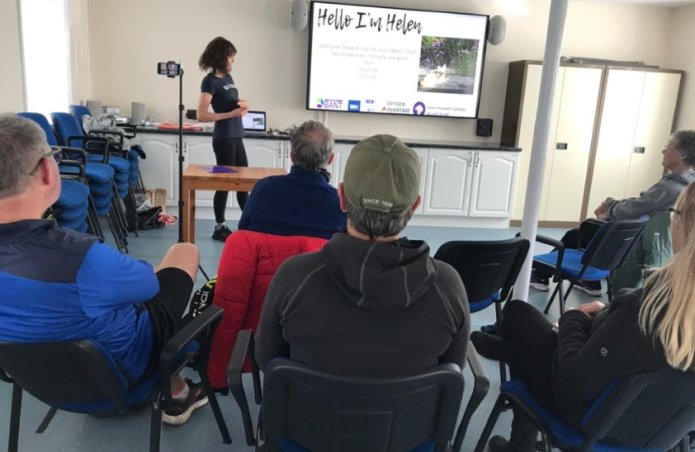
Workshops
Please contact me if you would like to run a workshop for your sports club, organisation or company. The subject can be tailored to the audience but includes anxiety, sleep and stress, sports performance or general health.
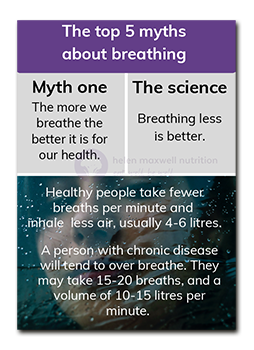
The Myths and the Science of Breathing
There’s so much more to correct breathing and it’s effect on our health than you might think. Download my FREE eBook to discover why everything you thought you knew about breathing is probably wrong!
Get your free breathing assessment and recommendations
Take my 3 minute breathing quiz
Take the Quiz now. Start here